

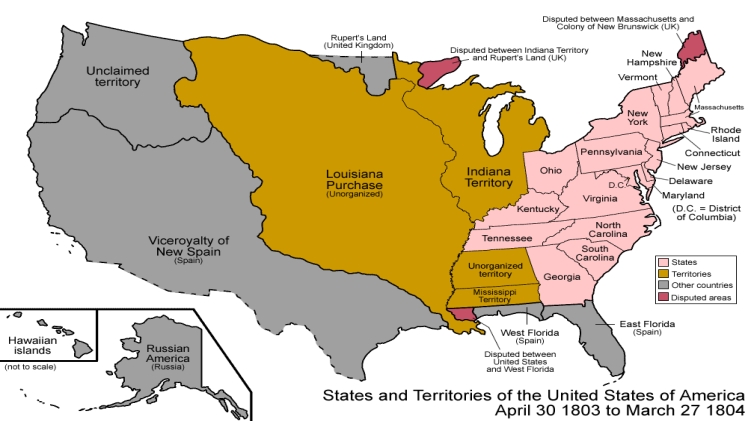
The Louisiana Purchase is one of the most significant events in American history, marking a pivotal moment when the United States expanded its territory dramatically. In 1803, the United States acquired a vast expanse of land from France, doubling the size of the nation. This historic land deal not only transformed the country geographically but also had profound political, economic, and social implications. In this article, we will explore the details of the Louisiana Purchase, the motivations behind it, and its lasting impact on the United States.
The Louisiana Territory
The Louisiana Territory, at the time of the purchase, was a massive area located in North America. It extended from the Mississippi River to the Rocky Mountains and from the Gulf of Mexico to the Canadian border. This vast region covered approximately 828,000 square miles, making it larger than the existing United States. The area included parts of 15 present-day U.S. states, among them Louisiana, Arkansas, Missouri, Iowa, Oklahoma, Kansas, Nebraska, and parts of Minnesota, North Dakota, South Dakota, and Montana.
Background and Motivations
The Louisiana Purchase was not a spontaneous event but rather the result of complex geopolitical circumstances and evolving strategic interests. Several key factors contributed to the United States’ decision to acquire the Louisiana Territory:
- Access to the Mississippi River: The Mississippi River was a vital waterway for American farmers, enabling them to transport goods to markets in New Orleans and beyond. However, the river’s mouth was controlled by Spain, which raised concerns about future access. The acquisition of the territory was seen as a way to secure control over this critical trade route.
- Growing Population and Westward Expansion: The United States was experiencing significant population growth, and settlers were pushing westward. As the population expanded, the need for new land for agriculture and settlement became increasingly pressing. The Louisiana Territory offered vast, fertile lands for this purpose.
- The Haitian Revolution: The Haitian Revolution, a slave uprising against French colonial rule in Haiti, had a considerable impact on France’s decision to sell the territory. The costly and tumultuous conflict in the Caribbean made the maintenance of Louisiana less appealing to the French government.
- Napoleon Bonaparte’s Ambitions: France, under the leadership of Napoleon Bonaparte, was involved in various European conflicts and sought to finance its military campaigns. The prospect of selling the Louisiana Territory to the United States for a substantial sum of money was an attractive way to raise funds and focus on other strategic interests.
The Purchase Process
The Louisiana Purchase negotiations began in early 1803 and involved diplomats from the United States, led by Robert Livingston and James Monroe, and representatives of France, including François Barbé-Marbois. The French offered to sell the entire territory for $15 million, an amount the United States agreed to. The deal was signed on April 30, 1803, and ratified by the United States Senate later that year.
The purchase amount of $15 million was equivalent to about three cents per acre, making it one of the most economically advantageous land deals in history. The acquisition of such an immense territory for a relatively small sum was a testament to the strategic thinking and foresight of the American negotiators.
Impact on the United States
The Louisiana Purchase had a profound and lasting impact on the United States, shaping the nation in several significant ways:
- Territorial Expansion: The acquisition effectively doubled the size of the United States, opening up vast new lands for settlement, agriculture, and economic development. This expansion contributed to the westward migration of American settlers and the exploration of the new territories.
- Economic Growth: The Louisiana Territory was rich in natural resources, including fertile soil and valuable fur-bearing animals. It provided an economic boost to the United States, allowing for increased agricultural production and trade.
- Geopolitical Influence: By securing control over the Mississippi River and its tributaries, the United States enhanced its geopolitical influence in the North American continent. It allowed for the growth of the American frontier and the extension of U.S. interests westward.
- Nation-Building: The acquisition of the Louisiana Territory was a significant step in the process of nation-building. It facilitated the settlement of the American frontier and helped shape the identity of the United States as a continental power.
- Cultural and Ethnic Diversity: The new territories brought about cultural and ethnic diversity as people from various backgrounds, including French, Spanish, Native American, and African, became part of the expanding nation. This diversity contributed to the mosaic of American culture.
- Political Consequences: The Louisiana Purchase raised important political questions about the expansion of slavery, the rights of settlers, and the relationship between the federal government and newly acquired territories. These issues would continue to shape American politics in the decades to come.
Conclusion
The Louisiana Purchase was a monumental event in American history, marking a turning point in the nation’s growth and development. The acquisition of the vast Louisiana Territory from France not only doubled the size of the United States but also had far-reaching implications for its economy, culture, and geopolitical influence. The Louisiana Purchase played a critical role in shaping the United States into the continental power it is today, and it remains a testament to the vision and ambition of early American leaders.